
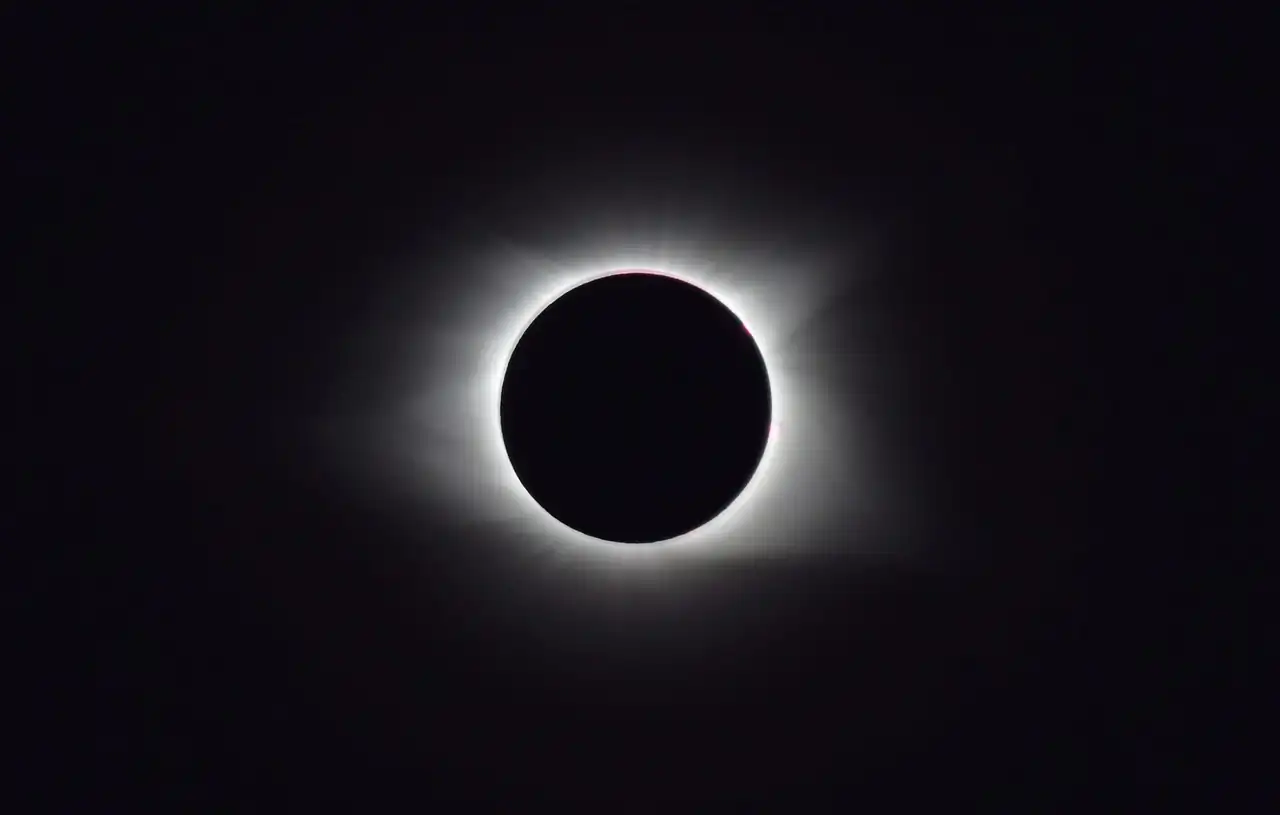
4Warn Weather – Now you see them, now you don’t. Wouldn’t it be nice if the clouds expected for Monday’s solar eclipse magically disappeared just in time for the moon to pass between the Earth and the sun?
New evidence suggests that this is exactly what will happen in the swaths of Mexico, Canada, and the United States. Even cities like Detroit that are just outside the path of totality could see some clouds vanish right before their eyes. But there’s a catch. The science only applies to one very specific type of cloud.
According to a recent study published in the journal Nature Communications Earth & Environment, shallow cumulus clouds start dissipating in large portions when a fraction of the sun is covered during an eclipse, and they don’t reform until after the event.
Although scientists have observed this phenomenon during past eclipses, now they have the evidence to back it up.
Using satellites, scientists were able to measure sunlight reflected by Earth to derive cloud properties and analyze clouds hidden inside the moon’s shadow.
Data was collected from three solar eclipses over Africa between 2005 and 2016.
The conclusion was that the relationship between solar radiation and the formation process of clouds caused cumulus clouds to dissipate, starting when the sun is 15% covered by the moon.
Why does this happen? During an eclipse, the surface of the Earth cools very quickly because the moon’s shadow blocks sunlight. This prevents warm air from rising from the surface, which is a key ingredient in the formation of cumulus clouds.
Unfortunately, like all good magic tricks, there’s much more to it than meets the eye.
The science behind the disappearing cloud act only applies to shallow cumulus clouds.
Those are the low, patchy, puffy clouds you would likely see on an otherwise bright, sunny day. It’s unlikely we will have those types of clouds here in Southeast Lower Michigan. But if you’re traveling to parts of Ohio or Upstate New York and you see those pretty white puffs of fair-weather clouds, take a close look. They might just disappear!